
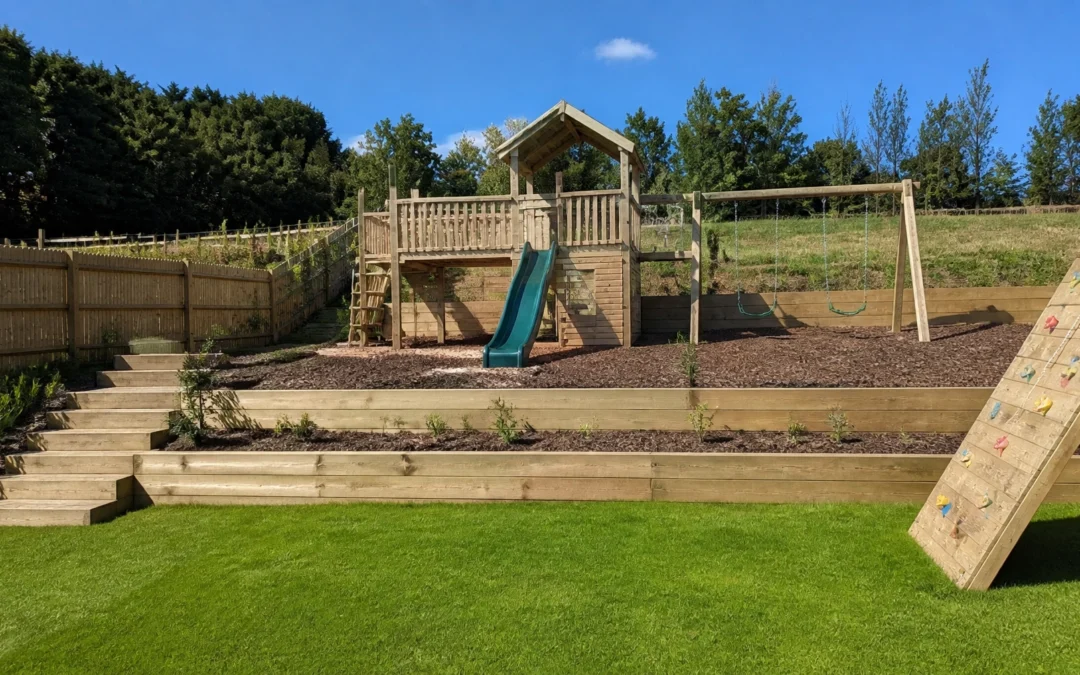
For many UK families, the dream of a backyard adventure playground is often met with a common geographical reality: the sloped garden. While a perfectly level lawn is the ideal canvas for any outdoor structure, many British landscapes are characterised by inclines, uneven terrain, and tiered spaces. These natural gradients often lead parents to believe that a high-quality climbing frame is an impossibility or a significant safety risk.
At Climbing Frame Installer, we understand that a sloped garden should not be a barrier to providing children with a stimulating and safe outdoor environment. However, successfully integrating a play structure into such a landscape requires more than just a standard DIY approach. It demands heavy-duty materials, precise engineering, and a deep understanding of safety regulations. This guide provides a comprehensive overview of how to navigate the challenges of uneven terrain to create a secure, long-lasting play area for children aged 2 to 10 years.
The Challenge of the UK Slope: Why Stability is Non-Negotiable
A climbing frame is a dynamic structure. As children jump, swing, and climb, the frame is subjected to various shifting forces. On level ground, these forces are distributed evenly through the base. On a slope, however, gravity exerts additional lateral pressure, which can lead to structural shifting, instability, and, eventually, a dangerous collapse if not addressed correctly.
The primary goal when installing a climbing frame for sloped garden uk settings is to ensure the play tower and its components remain perfectly level, regardless of the ground’s angle. A structure that is "pitched" with the slope is inherently unsafe; it stresses the joints of the timber and makes activities like sliding or swinging unpredictable.
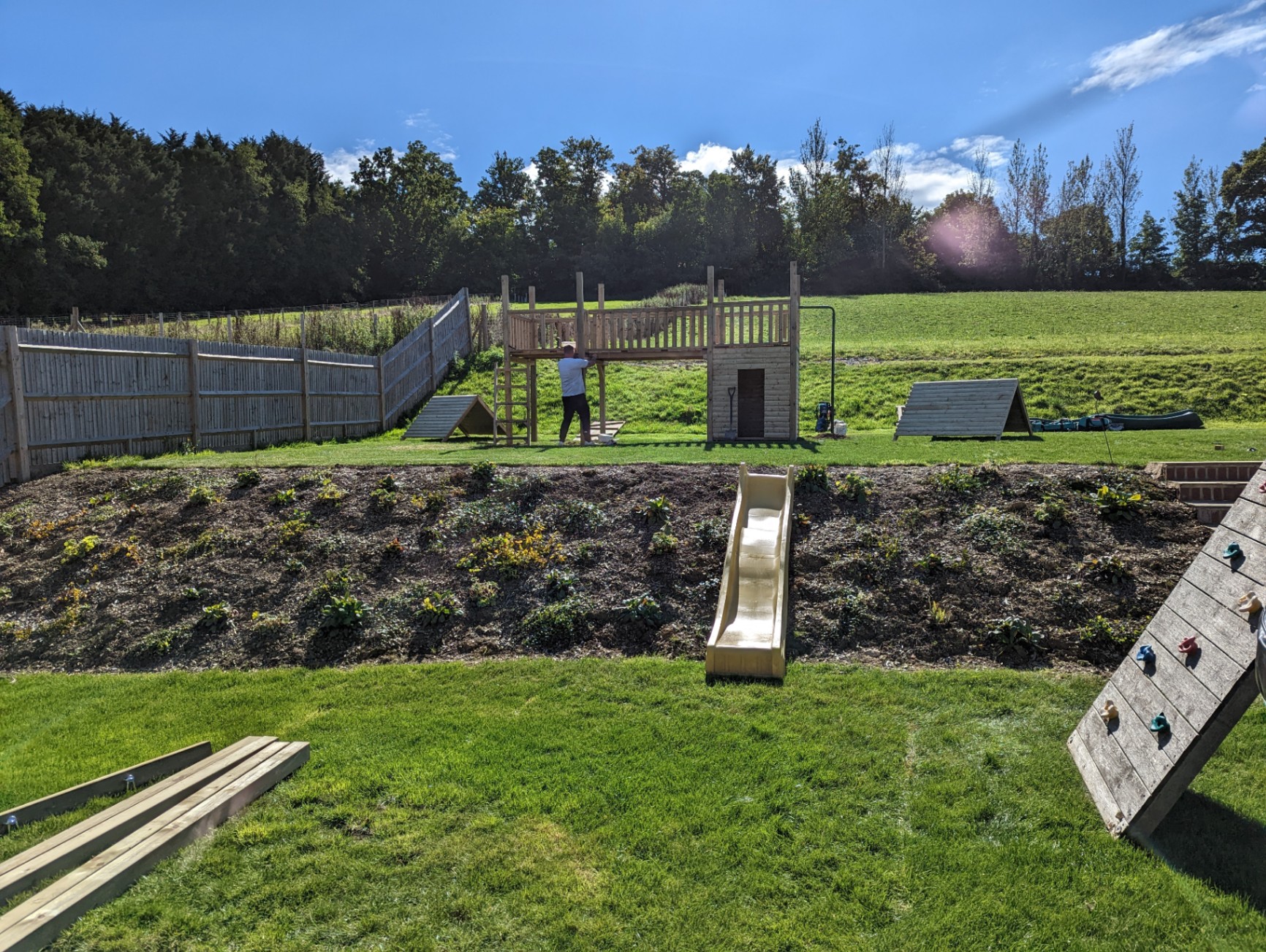
Professional Leveling Solutions
There are several professional methods we employ to manage sloped terrain:
- The "Cut and Fill" Method: For gentle slopes, the high side of the installation area is excavated, and the soil is redistributed to the lower side to create a flat pad. This requires careful compaction to prevent future subsidence.
- Terracing and Retaining Walls: For steeper gradients, creating a dedicated terrace using timber sleepers or stone blocks is the most effective solution. This provides a clear, level platform for the frame and helps contain safety surfacing like bark or rubber mulch.
- Structural Modification: In some bespoke cases, the frame itself can be adapted. By extending specific legs or digging certain posts deeper into the ground, a level platform is achieved without major earthworks. You can read more about our approach to leveling garden surfaces here.
Heavy-Duty Timber vs. Standard DIY Kits
When selecting a climbing frame, the quality of the materials is the single most important factor in its longevity and safety. Many off-the-shelf "budget" kits use thin, lightweight timber that is prone to warping, splitting, and excessive movement. For families seeking a multi-year investment, heavy duty climbing frames uk standards are essential.
Heavy-duty frames typically utilise thick, pressure-treated square-cut timber (often 90mm x 90mm for main posts). This provides the necessary mass to anchor the structure firmly into the ground, especially on uneven terrain. Unlike lightweight alternatives, these robust frames do not "hop" or sway during vigorous play.

We frequently work with premium manufacturers like Jungle Gym and Play Crazy, who design systems that can be significantly reinforced. These structures are built to withstand the UK's varied weather conditions, ensuring that the wood remains rot-resistant and structurally sound for a decade or more.
Safety Zones and Space Planning: The 1.5m – 2m Rule
Safety in a residential garden is governed by more than just the stability of the frame; it is also about the space around the frame. This is known as the "Safety Zone" or "Impact Area."
For any domestic climbing frame, a minimum obstacle-free safety zone is required. This area must be clear of fences, walls, trees, and other garden structures to prevent injury should a child fall or jump from the equipment.
Standard Clearance Guidelines
- General Clearance: A minimum of 1.5 metres to 2 metres of clear space should surround the entire structure.
- Swings: These require a more substantial safety zone, often extending significantly to the front and rear of the swing beam, depending on the height of the top bar.
- Slide Exits: The area at the bottom of the slide must be clear and cushioned to allow children to exit safely and clear the path for the next user.

When planning a bespoke climbing frames uk project, we carefully map these zones out in the initial design phase. This is particularly crucial in smaller or awkwardly shaped gardens where space is at a premium. Ensuring these zones are respected is a fundamental part of a professional climbing frame installation.
Impact-Absorbing Surfaces: Choosing the Right Base
The surface beneath the climbing frame is just as important as the frame itself. While grass is a natural choice, it can wear away in high-traffic areas, such as under swings or at the base of a slide, leaving hard, compacted earth.
For frames with a fall height (the distance from the highest platform to the ground) exceeding 600mm, an impact-absorbing surface is highly recommended. Common options include:
- Play Bark or Woodchip: An aesthetic and effective choice, though it requires occasional topping up and a retaining border (especially on slopes).
- Rubber Mulch: A durable, bonded rubber surface that provides excellent cushioning and does not wash away.
- Rubber Tiles: Often used on level terraces for a clean, modular finish.
We strictly advise against installing play equipment on concrete or asphalt, as these surfaces provide zero impact protection and significantly increase the risk of serious injury.
Navigating Planning Permission and Boundaries
A common question from parents relates to planning permission. In the UK, most domestic climbing frames fall under "Permitted Development." However, there are specific triggers that may require a formal application to your local planning authority:
- Overall Height: If the structure exceeds 4 metres (with a dual-pitched roof) or 3 metres (for any other roof), it may require permission.
- Proximity to Boundaries: If the climbing frame is within 2 metres of a boundary fence or wall, and the height of the structure (or its platform) exceeds 2.5 metres, you should consult your local guidelines.
- Overlooking: It is vital to consider the privacy of your neighbours. High platforms that provide a direct line of sight into a neighbouring window or private garden area can lead to complaints. Strategic placement or the addition of privacy panels can often mitigate these issues.
We recommend placing the structure as centrally as possible within the safety zones to avoid boundary disputes and ensure compliance with height restrictions.
The Value of Professional Climbing Frame Installation
While many manufacturers offer "easy-to-assemble" kits, the reality of building a heavy-duty play system is often a multi-day task requiring specialized tools and physical labor. A professional installation ensures that the structure is built exactly to the manufacturer's specifications, which is vital for maintaining product warranties and, more importantly, child safety.

By choosing professional climbing frame installation, families benefit from:
- Structural Integrity: Correct use of ground anchors and concrete footings.
- Efficiency: What might take a parent several weekends can be completed by a professional team in a fraction of the time.
- Expert Insight: Installers can identify potential hazards, such as protruding bolts or incorrect spacing, that an amateur might overlook.
- Terrain Management: Professionals have the experience to handle slopes and uneven ground that would baffle a standard DIYer.
Whether you have purchased a pre-designed kit or are looking for a completely custom solution, the priority should always be a setup that grows with your family and provides a safe haven for play.
Conclusion
A sloped garden is not a reason to compromise on your children's outdoor play. By investing in heavy-duty timber, adhering to safety zone requirements, and ensuring a level, professional installation, you can transform a challenging landscape into a visionary play area.
If you are concerned about the gradient of your garden or the complexity of a heavy-duty build, our team is here to help. From initial advice on site placement to the final tightening of the last bolt, we ensure your climbing frame is a safe, stable, and permanent fixture for your family to enjoy.
For more information on our services or to discuss your specific garden requirements, please visit www.climbingframeinstaller.co.uk.