
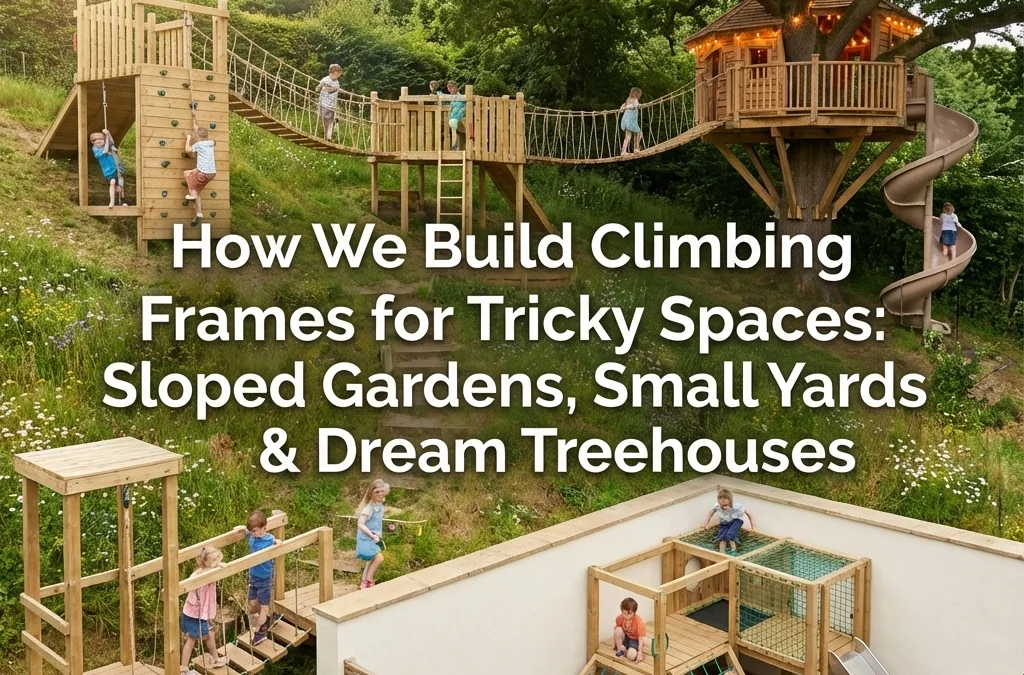
Every garden presents unique challenges, and some of the most rewarding climbing frame installations happen in spaces that others might consider impossible. Sloped terrain, compact yards, and tree-integrated designs require specialized expertise to transform limitations into extraordinary play experiences.
At Climbing Frame Installer, we specialize in custom design, manufacture, and installation of climbing frames that work with nature rather than against it. Whether you're dealing with a steep slope, a postage-stamp garden, or dreaming of an elevated treehouse adventure, professional design and installation ensures safety, durability, and maximum play value.
Conquering Sloped Gardens: Engineering for Stability
Sloped gardens present unique structural challenges that require careful planning and specialized construction techniques. The key to successful installation lies in understanding how ground conditions affect frame stability and implementing solutions that work with the natural contours.
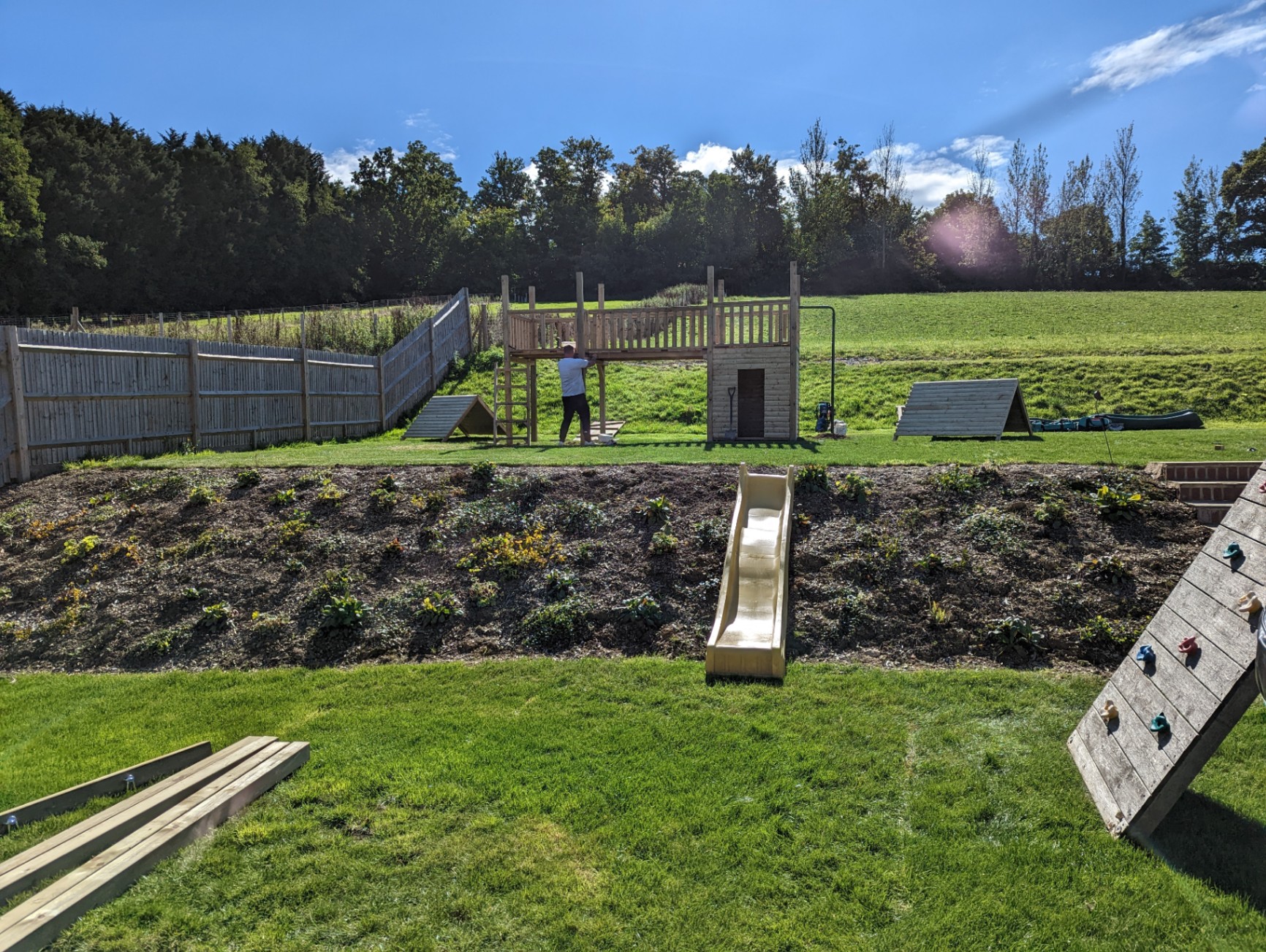
The primary concern with sloped installations is preventing structural "racking" – the tendency for frames to lean and place excessive stress on joints and connections. This phenomenon occurs when climbing frames are installed on uneven ground, causing the structure to gradually shift and potentially compromise safety over time.
Professional installation begins with comprehensive site assessment. We evaluate the degree of slope, soil composition, drainage patterns, and existing landscape features to determine the optimal approach. Some slopes require minimal ground preparation, while steeper gradients need retaining walls or stepped foundations to create stable platforms.
Ground preparation involves selective excavation to create level mounting points for key structural elements. Rather than attempting to level entire areas, experienced installers focus on creating stable anchor points that distribute weight evenly across the frame. This approach preserves natural drainage patterns while ensuring structural integrity.
Specialized anchoring systems are essential for sloped installations. Concrete footings provide superior stability compared to standard ground anchors, particularly in loose or clay soils common in sloped areas. These foundations extend below frost lines to prevent seasonal movement that could affect frame alignment.
The design process also considers access routes and safety zones. Sloped areas require careful planning of approach paths and fall zones to ensure children can safely navigate to and from play elements. Strategic placement of stepping stones or integrated pathways creates safe access while complementing the overall design aesthetic.
Maximizing Small Yards: Creative Design for Compact Spaces
Small gardens demand innovative design approaches that maximize play value within limited footprints. The challenge lies in creating engaging, multi-functional play structures that provide diverse activities without overwhelming the available space.
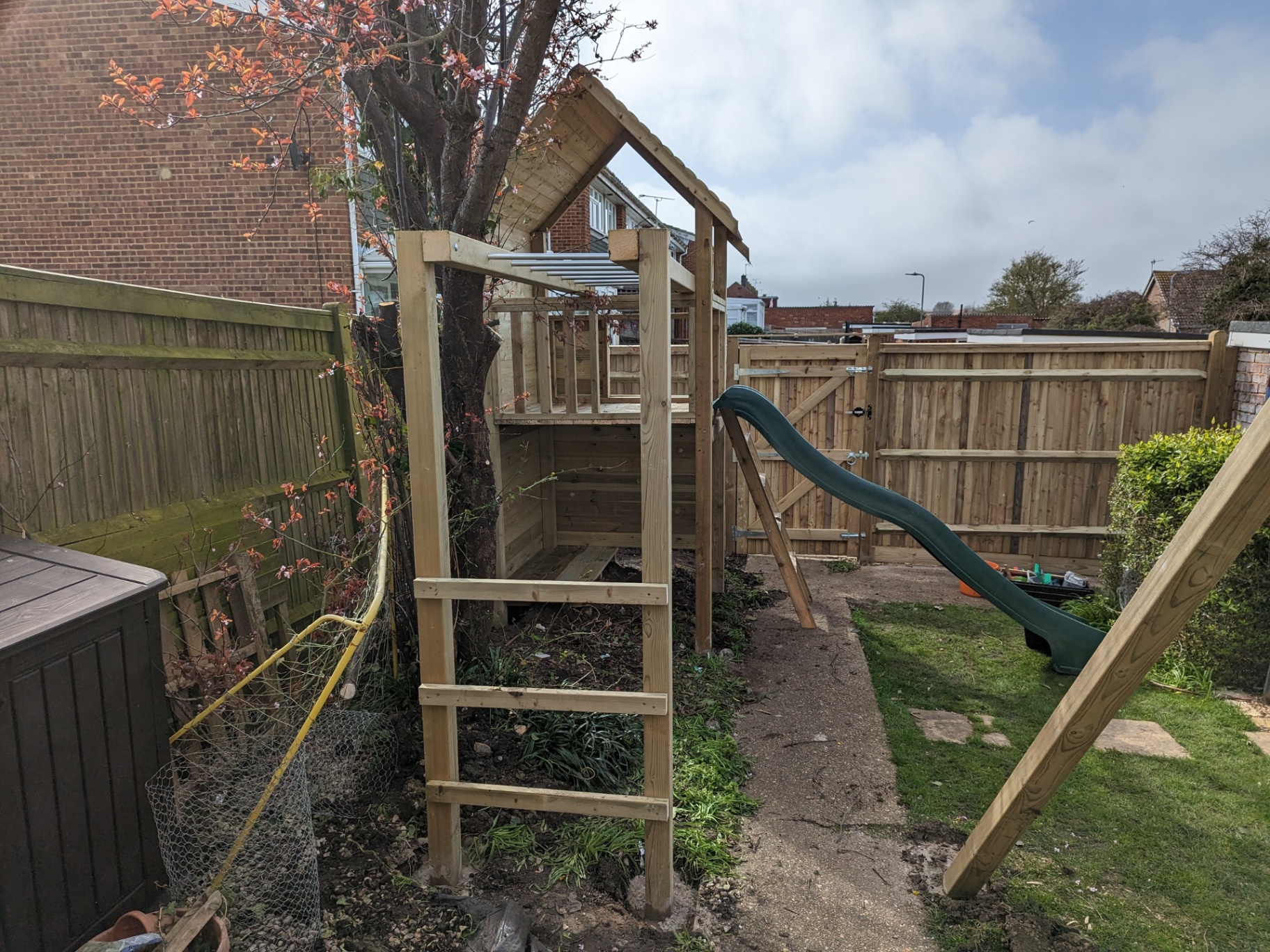
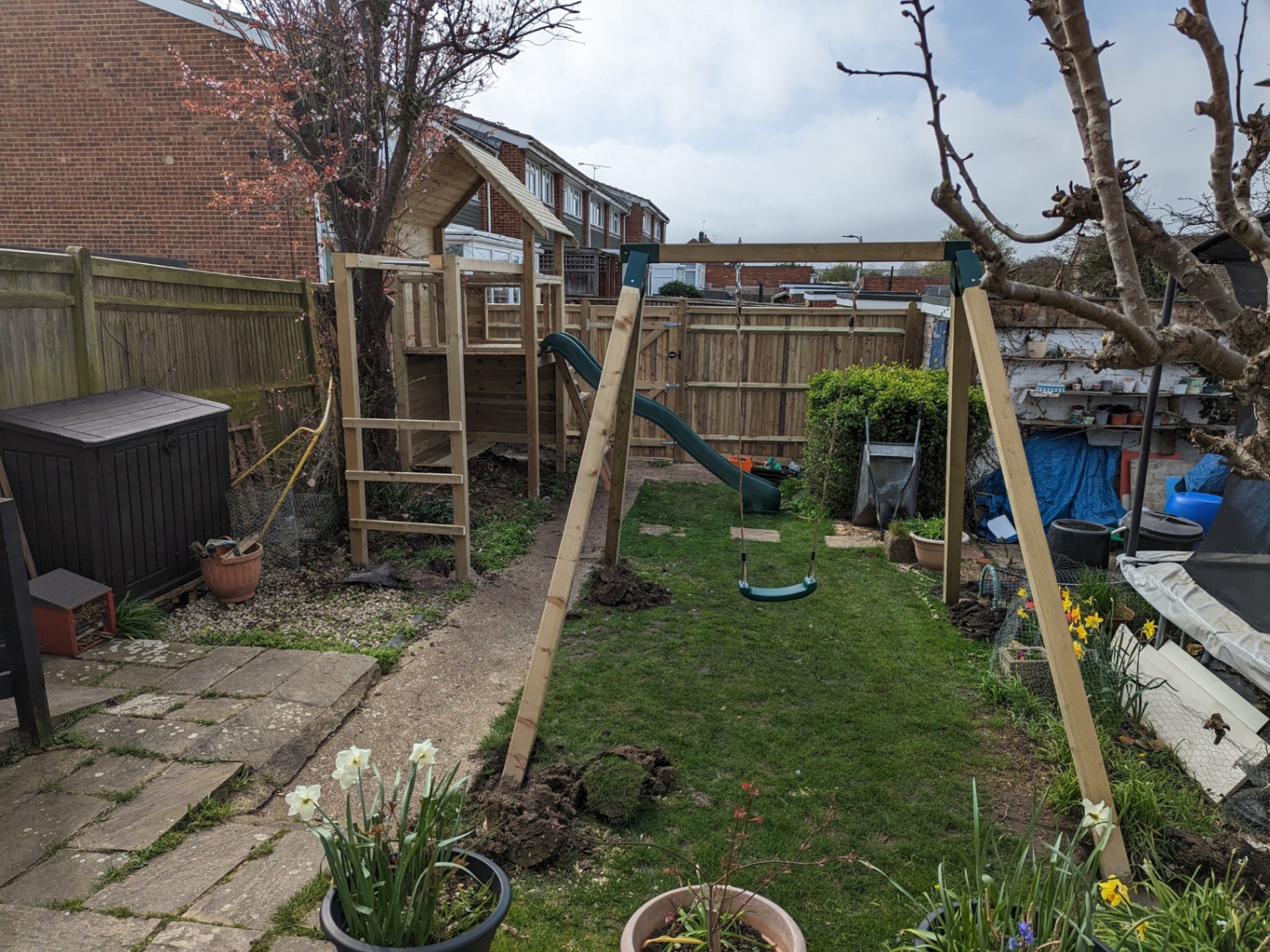
Vertical design principles become crucial in compact installations. Rather than spreading activities horizontally, professional designers create multi-level structures that utilize height to expand play opportunities. Tower-based designs like our Jungle Gym Tower configurations exemplify this approach, incorporating climbing walls, platforms, slides, and swings within minimal ground space.
Integration with existing features transforms limitations into advantages. Boundary walls, existing trees, and garden structures become incorporated elements that support or complement the climbing frame design. This approach not only saves space but creates unique play experiences unavailable with standard installations.
Modular design principles allow for future expansion as children grow and interests evolve. Initial installations might focus on foundational elements like platforms and basic climbing features, with provisions for adding swings, slides, or additional towers as space and budget allow.
Material selection plays a crucial role in small space installations. Lighter-colored woods and open framework designs create visual space while maintaining structural integrity. Transparent or semi-transparent elements like rope bridges and cargo nets provide connectivity without visual bulk.
Safety zone management requires particular attention in compact installations. Professional designers ensure adequate clearance around all play elements while maximizing usable space. This might involve custom-designed fall surfaces, integrated boundary features, or multi-purpose safety elements that serve both protective and play functions.
Dream Treehouses: Elevated Adventures with Natural Integration
Treehouse installations represent the pinnacle of custom climbing frame design, combining structural engineering with natural integration to create truly magical play experiences. These installations require specialized expertise in both construction and tree biology to ensure safety for both children and trees.
Tree assessment forms the foundation of every treehouse project. Professional arborists evaluate tree health, species characteristics, growth patterns, and structural capacity to determine suitable support strategies. Not all trees are appropriate for treehouse construction, and professional evaluation prevents damage to both trees and structures.
Support system design varies based on tree characteristics and desired structure complexity. Some installations utilize the tree as a central support element, while others position the tree within or adjacent to the structure for shade and natural aesthetics. Advanced installations might incorporate multiple trees or combine tree and ground-based support systems.
Connection methods require specialized hardware designed specifically for tree installations. Traditional bolts and screws can damage growing trees, while proper tree-friendly hardware allows for natural growth while maintaining structural connections. These systems accommodate tree movement in wind while preserving connection integrity.
Platform design considers both structural requirements and tree protection. Elevated platforms must distribute weight appropriately while allowing air circulation around tree trunks and root systems. Integrated drainage prevents water accumulation that could damage both wooden structures and tree health.
Access planning becomes more complex with elevated installations. Multiple access routes – ladders, stairs, rope climbs, or climbing walls – provide variety while ensuring safe egress in all conditions. Ground-level play elements often complement elevated features to create comprehensive play experiences.
Professional Design Process: From Vision to Reality
Custom climbing frame design begins with comprehensive consultation to understand family needs, site conditions, and long-term vision. This collaborative process ensures final installations exceed expectations while addressing practical considerations often overlooked in off-the-shelf solutions.
Site surveys capture detailed measurements, soil conditions, existing features, and environmental factors that influence design decisions. Professional surveyors identify opportunities and constraints that affect both initial installation and future maintenance requirements.
Design development utilizes computer-aided design tools to create detailed visualizations and structural calculations. These tools allow families to explore different configurations and understand how proposed installations will look and function within their specific spaces.
Material specification focuses on durability, safety, and aesthetic integration with existing landscape features. Premium timber selection ensures longevity while weather-resistant treatments protect investments against natural elements without compromising environmental safety.
Manufacturing processes maintain quality control from initial cutting through final assembly. In-house manufacturing allows for precise customization and quality assurance that mass-produced alternatives cannot match.
Safety Considerations: Professional Standards and Best Practices
Safety requirements extend far beyond basic stability to encompass age-appropriate design, proper spacing, and comprehensive fall protection. Professional installations adhere to stringent safety standards while maintaining engaging play experiences.
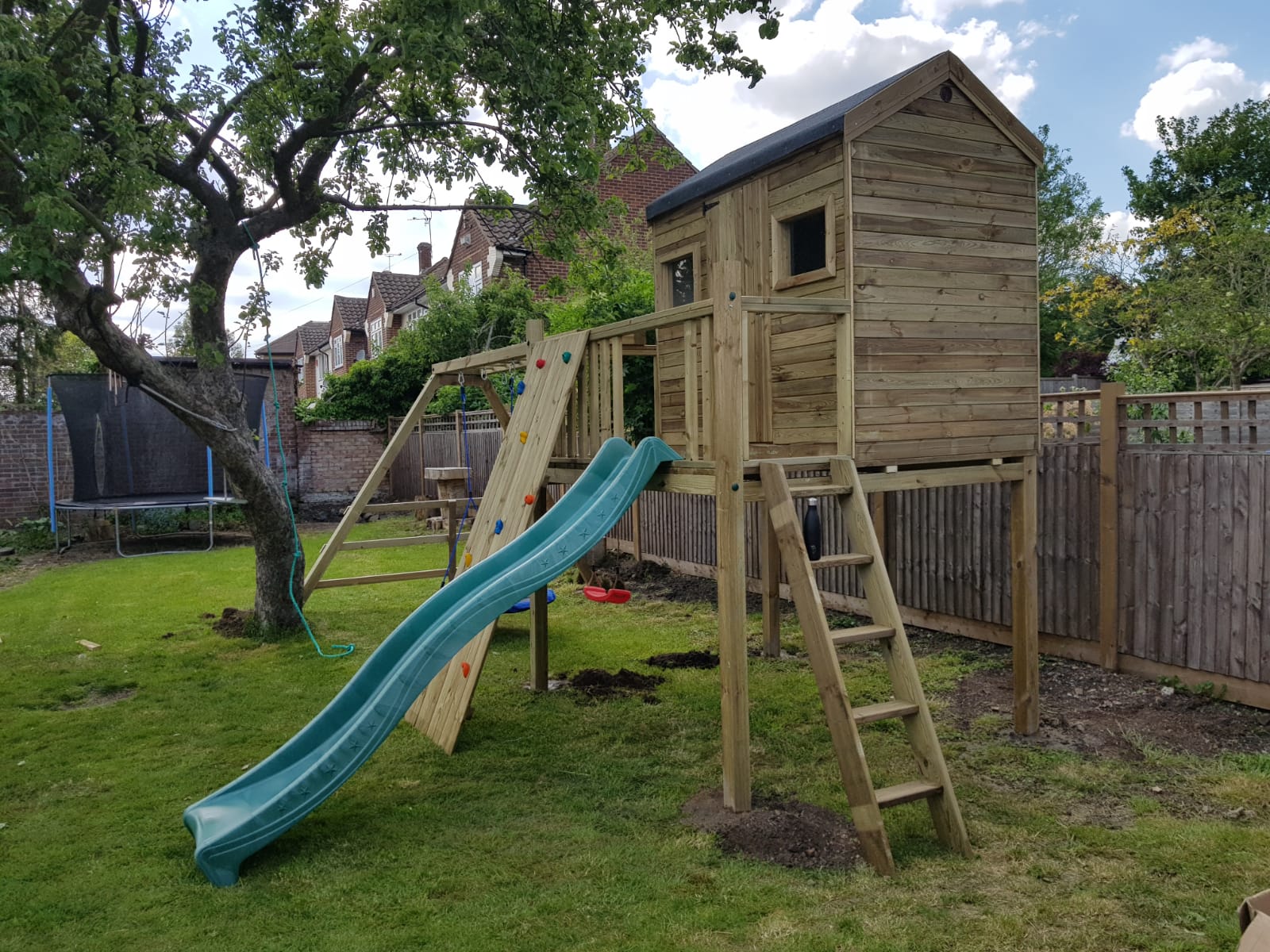
Structural engineering calculations ensure adequate load capacity for intended use plus safety margins. Professional installers understand how different play activities create varying stress patterns and design accordingly to prevent structural failure under normal and exceptional use conditions.
Fall zone management requires precise calculation and implementation of appropriate safety surfaces. Different activities require different protective measures, from impact-absorbing surfaces under swings to extended clear zones around slides and climbing elements.
Age-appropriate design considerations influence everything from platform heights to handrail spacing. Professional designers understand child development patterns and create installations that remain safe and engaging as children grow and develop new capabilities.
Regular inspection protocols ensure ongoing safety through proper maintenance scheduling and systematic evaluation of wear patterns. Professional installers provide comprehensive maintenance guidance and ongoing support to preserve safety and extend installation lifespan.
Why Choose Professional Installation
Professional installation delivers value far beyond basic assembly services. Experienced installers bring specialized knowledge, proper tools, and comprehensive insurance coverage that protect both installations and property.
Site preparation expertise prevents common installation failures that compromise both safety and aesthetics. Professional installers understand soil conditions, drainage requirements, and foundation specifications that ensure long-term stability.
Quality assurance processes verify every aspect of installation from initial site preparation through final safety inspection. Professional installers stake their reputations on comprehensive workmanship that stands up to years of intensive use.
Warranty coverage provides peace of mind through comprehensive protection against installation defects and material failures. Professional installations include ongoing support that helps families maintain their investments properly.
Whether you're dealing with a challenging slope, working within a compact garden, or dreaming of an integrated treehouse experience, professional design and installation transforms limitations into opportunities. Our expertise in custom manufacture and installation ensures your climbing frame becomes a centerpiece that grows with your family while providing years of safe, engaging play.
Ready to transform your challenging space into an extraordinary play environment? Contact Climbing Frame Installer to schedule your consultation and discover how professional design can turn your vision into reality.