
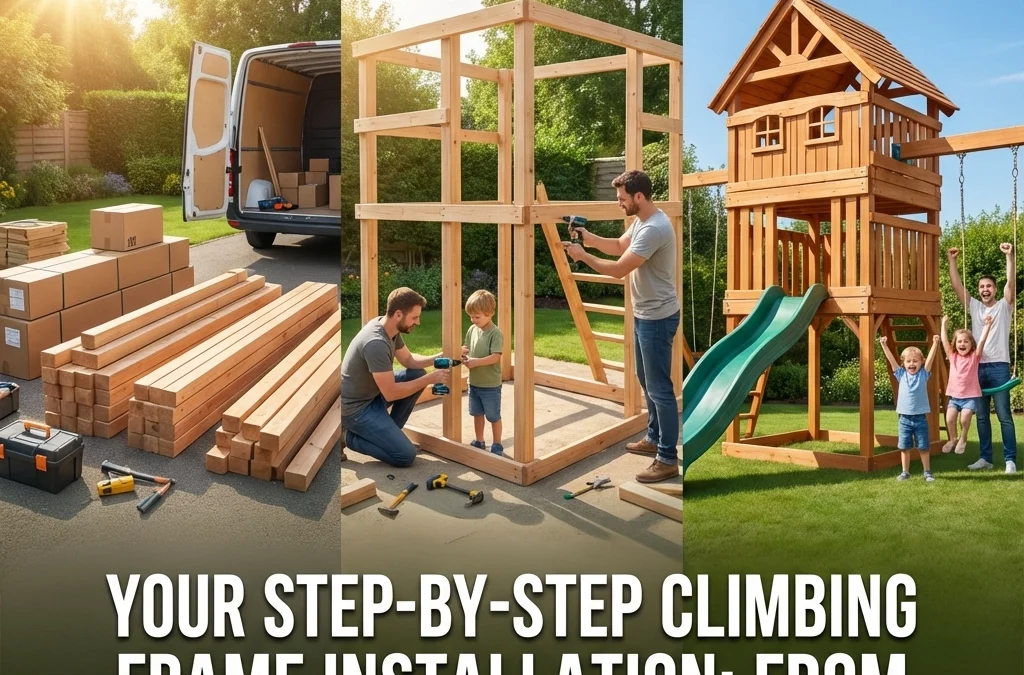
Whether families choose a custom-designed climbing frame or purchase equipment online and require professional installation, understanding the complete installation process helps set proper expectations and ensures optimal results. This comprehensive guide outlines every stage from initial consultation through final safety checks, covering both bespoke designs and third-party installations.
Initial Consultation and Site Assessment
The installation process begins with a thorough site assessment, regardless of whether the climbing frame is custom-designed or pre-purchased. Professional installers evaluate the intended location, measuring available space and identifying potential challenges such as slopes, drainage issues, or proximity to existing structures.
During this phase, soil conditions receive careful examination to determine appropriate foundation requirements. Different climbing frames require varying levels of ground preparation, from simple leveling to concrete footings for larger commercial-grade installations. Understanding these requirements early prevents delays and ensures proper budgeting.
Site access also receives evaluation during the initial assessment. Installers identify the optimal route for equipment delivery, considering gate widths, overhead clearance, and ground conditions that might affect vehicle access. This planning proves essential for smooth project execution.
Pre-Installation Preparation
Once site assessment concludes, preparation work begins several days before installation. For custom designs, materials arrive pre-cut and ready for assembly, with all components labeled for efficient construction. Third-party installations require careful coordination to ensure purchased equipment arrives when professional installers are scheduled.
Ground preparation typically starts 24-48 hours before installation day. This process involves clearing vegetation, removing obstacles, and creating a level foundation. For installations requiring concrete footings, this work must be completed with adequate curing time before frame assembly begins.
Safety perimeters are established around the work area, ensuring adequate clearance for equipment movement and component assembly. Professional installers maintain a minimum 2.2-meter clearance around the planned installation area, providing sufficient space for safe construction practices.
Delivery and Component Inventory
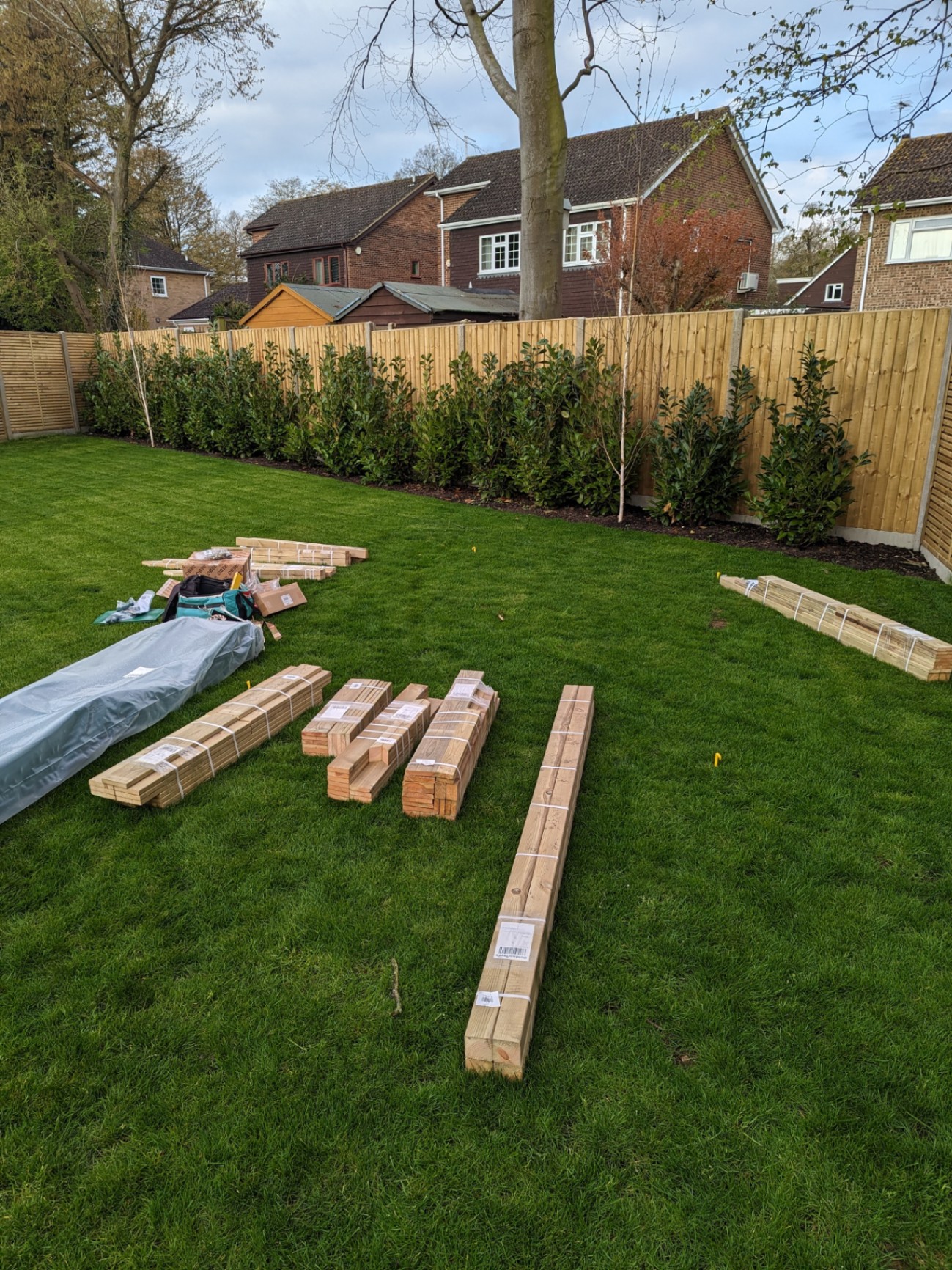
Installation day begins with systematic unpacking and inventory of all components. Professional installers spread materials across a clear area, typically on lawn or hard surfaces, organizing pieces according to assembly sequence. This methodical approach prevents delays caused by searching for specific components during construction.
Each delivery receives thorough inspection against provided component lists. Hardware packages are opened and sorted, with fasteners organized by type and size. This preparation phase, while seemingly time-consuming, significantly accelerates actual assembly and reduces the likelihood of missing components being discovered mid-installation.
For third-party installations, installers verify that all manufacturer-supplied components are present and undamaged. Any missing or damaged pieces are identified immediately, allowing for replacement ordering before assembly begins.
Foundation and Anchoring Systems
Ground preparation varies significantly based on climbing frame size and local soil conditions. Smaller residential frames often require only basic ground leveling and compaction, while larger installations may necessitate concrete footings or specialized anchoring systems.
For installations requiring underground frameworks, precise excavation ensures proper positioning and stability. Channels are dug according to manufacturer specifications or custom design requirements, with particular attention paid to drainage considerations. Proper drainage prevents water accumulation that could compromise foundation stability over time.
Leveling receives meticulous attention during foundation work. Even minor discrepancies at the foundation level become magnified throughout the completed structure, affecting both safety and appearance. Professional installers use precision leveling equipment to ensure accuracy within acceptable tolerances.
Frame Assembly Process
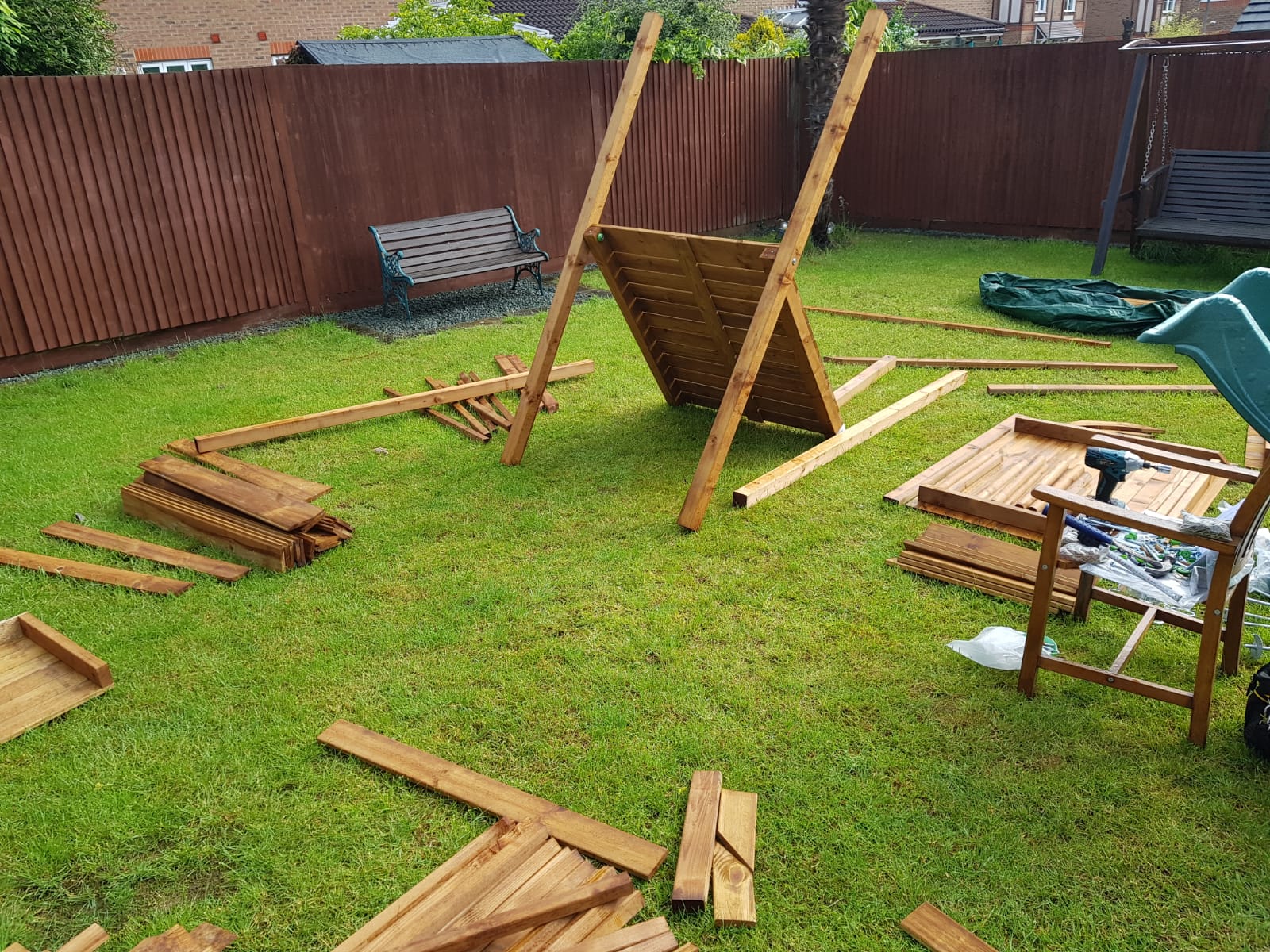
Assembly begins with primary structural components, typically starting with base frames and vertical support posts. These foundational elements must be positioned accurately, as subsequent components depend on their precise placement. Professional installers work systematically, completing each assembly stage before proceeding to the next.
Bolted connections receive particular attention during assembly. Each fastener is installed hand-tight initially, allowing for minor adjustments as additional components are added. Final tightening occurs only after all components are in position, ensuring optimal alignment and structural integrity.
Complex installations involving multiple towers, bridges, or specialized features require careful sequencing to maintain accessibility for installers. Professional teams coordinate their efforts to avoid working in confined spaces or compromising safety during assembly.
Specialized Feature Installation
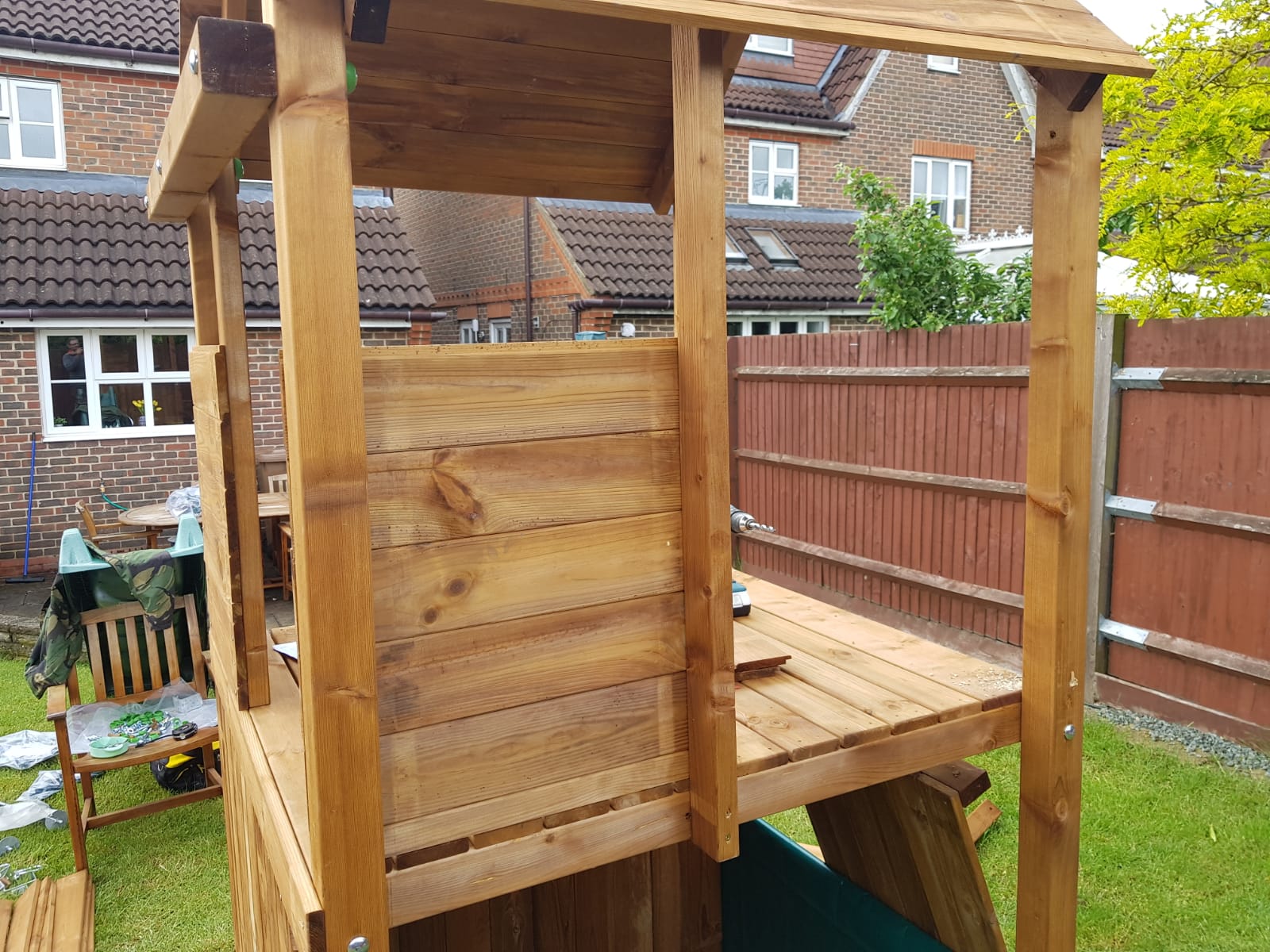
Many climbing frames include specialized features such as climbing walls, monkey bars, or integrated playhouses. These components often require additional installation steps and careful attention to safety clearances and proper anchoring.
Climbing walls must be positioned to provide adequate fall zones while maintaining proper angle specifications for safe use. Hardware mounting points receive reinforcement as needed to support dynamic loads generated by active play.
Swing attachments and monkey bars require precise alignment and robust mounting to handle repetitive loading. Professional installers verify that all moving components operate smoothly and that safety clearances meet or exceed manufacturer recommendations.
Safety Systems and Fall Protection
Professional installation includes comprehensive safety system implementation. This phase involves installing appropriate fall surfaces, verifying safety clearances around all equipment, and ensuring that all moving parts operate within safe parameters.
Fall zone preparation varies based on equipment height and local safety requirements. Professional installers calculate required fall zones for each piece of equipment and verify that adequate space is available. Where space limitations exist, additional safety measures such as impact-absorbing surfaces may be recommended.
All fasteners receive final torque verification during this phase. Critical connections are checked against manufacturer torque specifications to ensure optimal safety margins without over-tightening that could damage components.
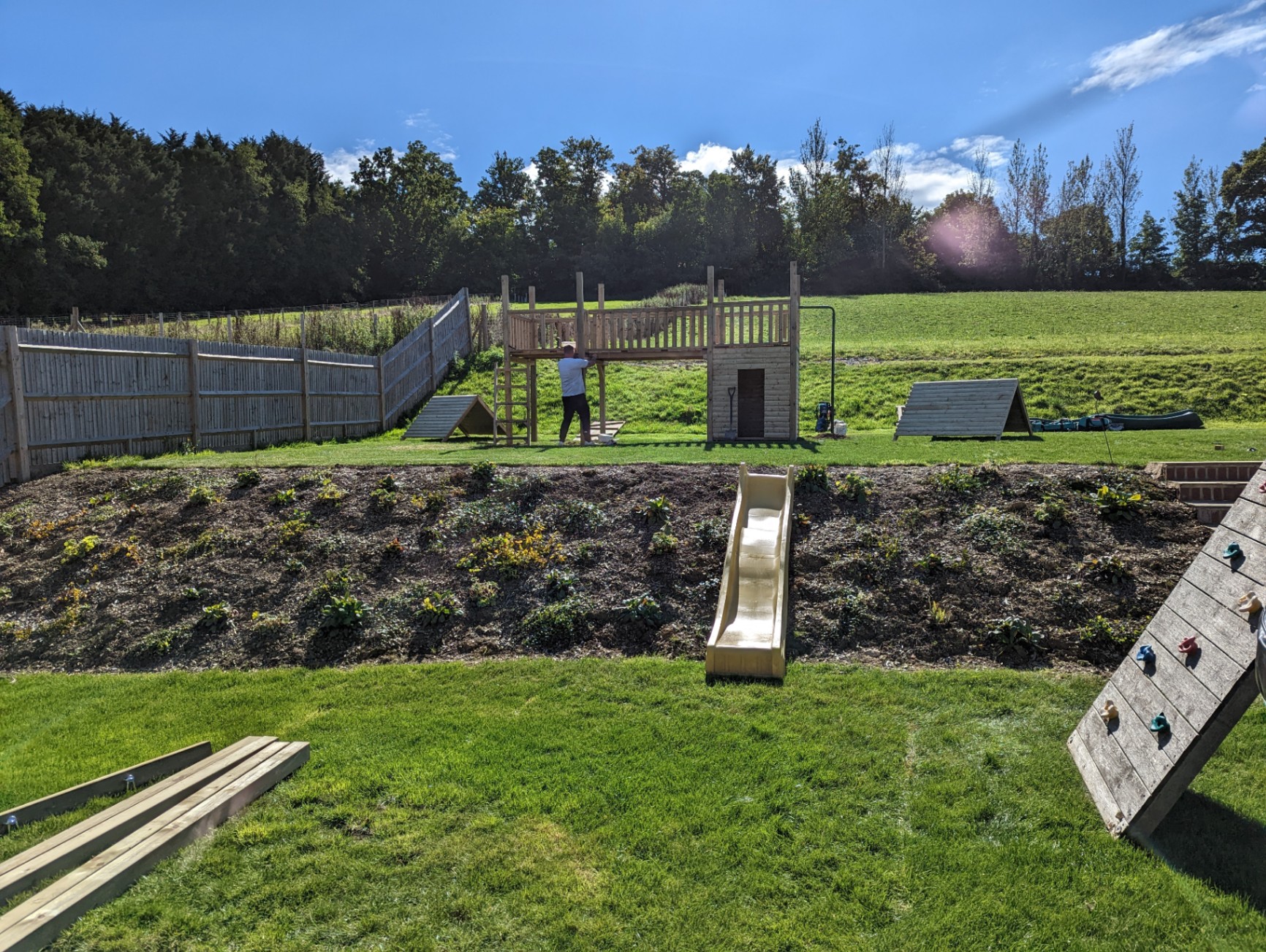
Final Inspection and Quality Assurance
Comprehensive inspection marks the final installation phase. Professional installers conduct systematic checks of all components, connections, and safety features. This process includes verification that all moving parts operate correctly and that no sharp edges or pinch points exist.
Documentation provided to clients includes maintenance recommendations, safety guidelines, and warranty information. Professional installers explain proper use guidelines and identify components requiring periodic inspection or maintenance.
The installation site receives thorough cleanup, with all packaging materials and construction debris removed. Landscaping restoration may be included depending on the scope of ground disturbance during installation.
Post-Installation Support and Maintenance
Professional installation services typically include follow-up support to address any questions or concerns that arise during initial use. This support proves valuable for families unfamiliar with climbing frame maintenance requirements or safety guidelines.
Seasonal maintenance recommendations help ensure long-term safety and appearance. Professional installers provide guidance on appropriate cleaning products, lubrication schedules for moving parts, and signs that indicate professional inspection may be needed.
Understanding the complete installation process helps families make informed decisions about climbing frame purchases and installation services. Professional installation ensures optimal safety, performance, and longevity while providing peace of mind for busy families seeking quality outdoor play solutions.
Whether choosing custom design services or requiring installation of pre-purchased equipment, working with experienced professionals streamlines the entire process from initial consultation through final quality assurance. This systematic approach delivers reliable results while minimizing disruption to family routines and property.