
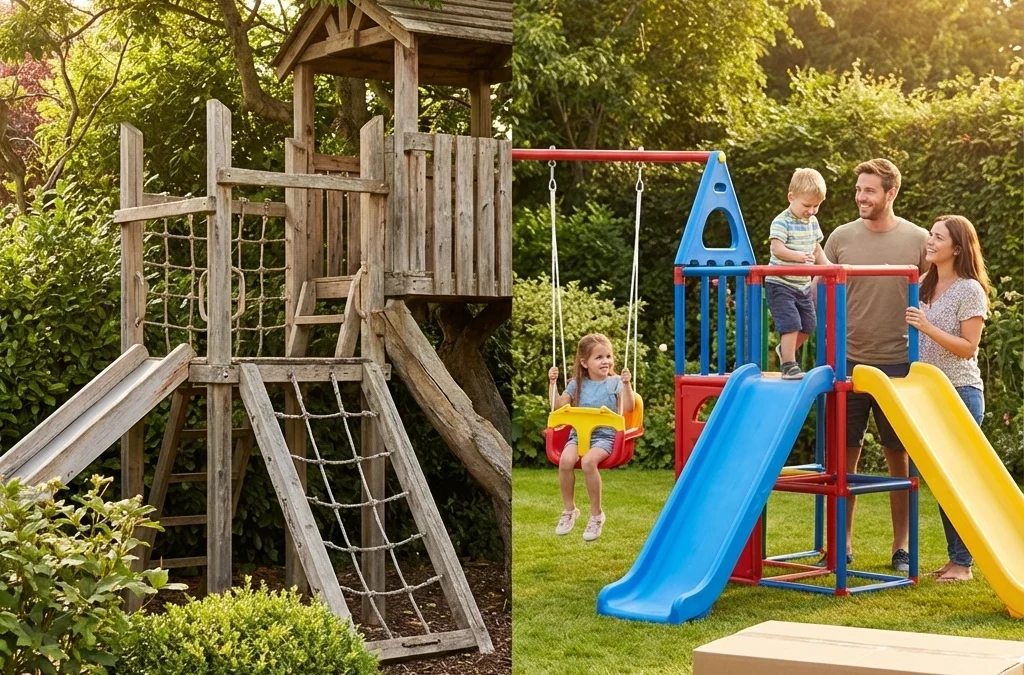
When planning the perfect outdoor play area for children, families face a crucial decision: should they invest in a fully bespoke climbing frame designed and manufactured specifically for their garden, or purchase a pre-made frame that requires professional installation? This choice impacts not only the immediate budget but also the long-term value, safety, and enjoyment the family will experience for years to come.
The decision between bespoke and shop-bought climbing frames involves multiple factors including cost considerations, customization requirements, safety standards, installation complexity, and the specific needs of the garden space. Understanding these differences enables families to make an informed choice that aligns with their priorities and circumstances.
Understanding Bespoke Climbing Frames
Bespoke climbing frames represent the premium option in outdoor play equipment, offering complete customization from initial design through final installation. These custom-built structures are manufactured specifically for each family's requirements and garden specifications.
Customization and Design Flexibility
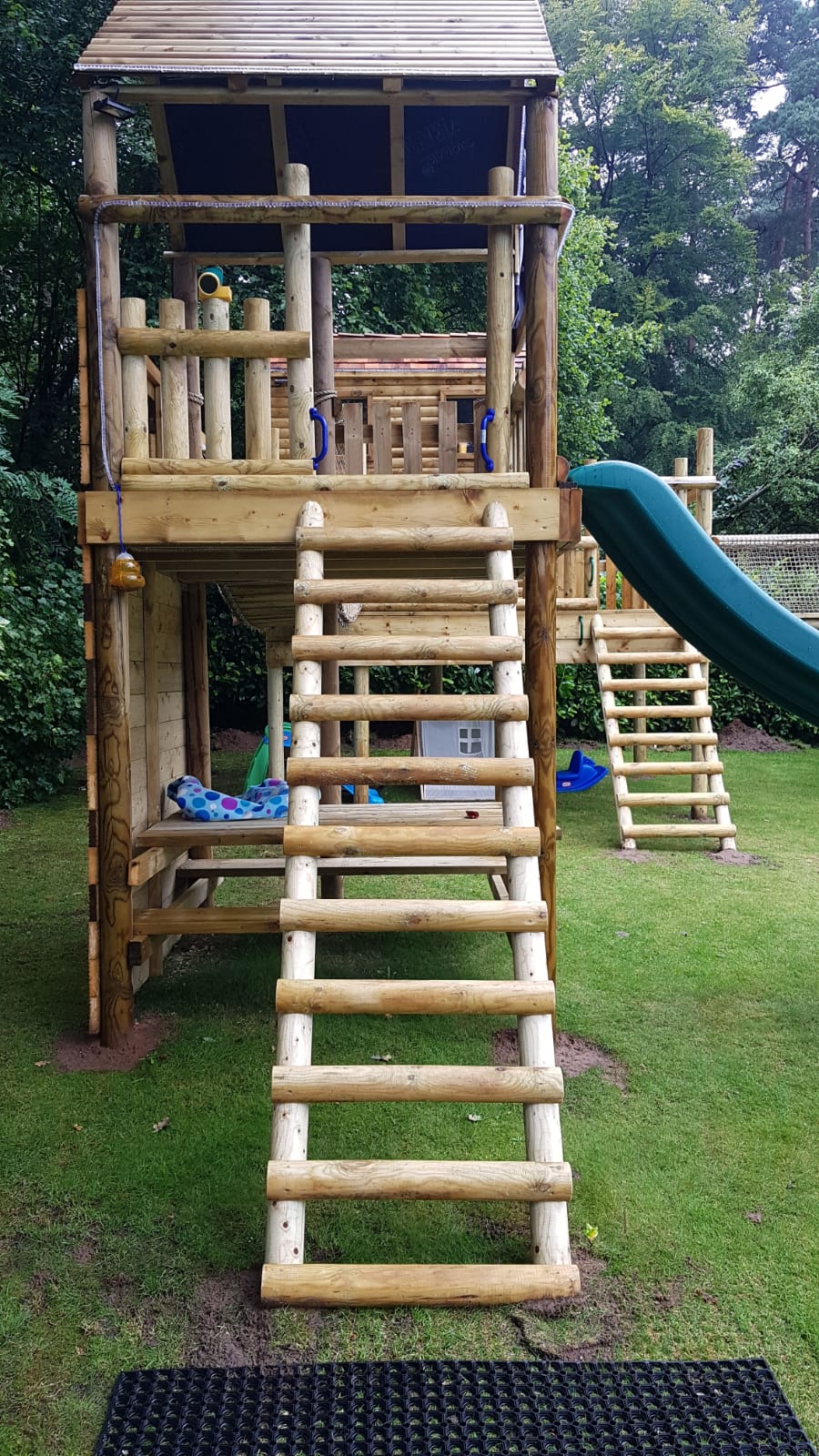
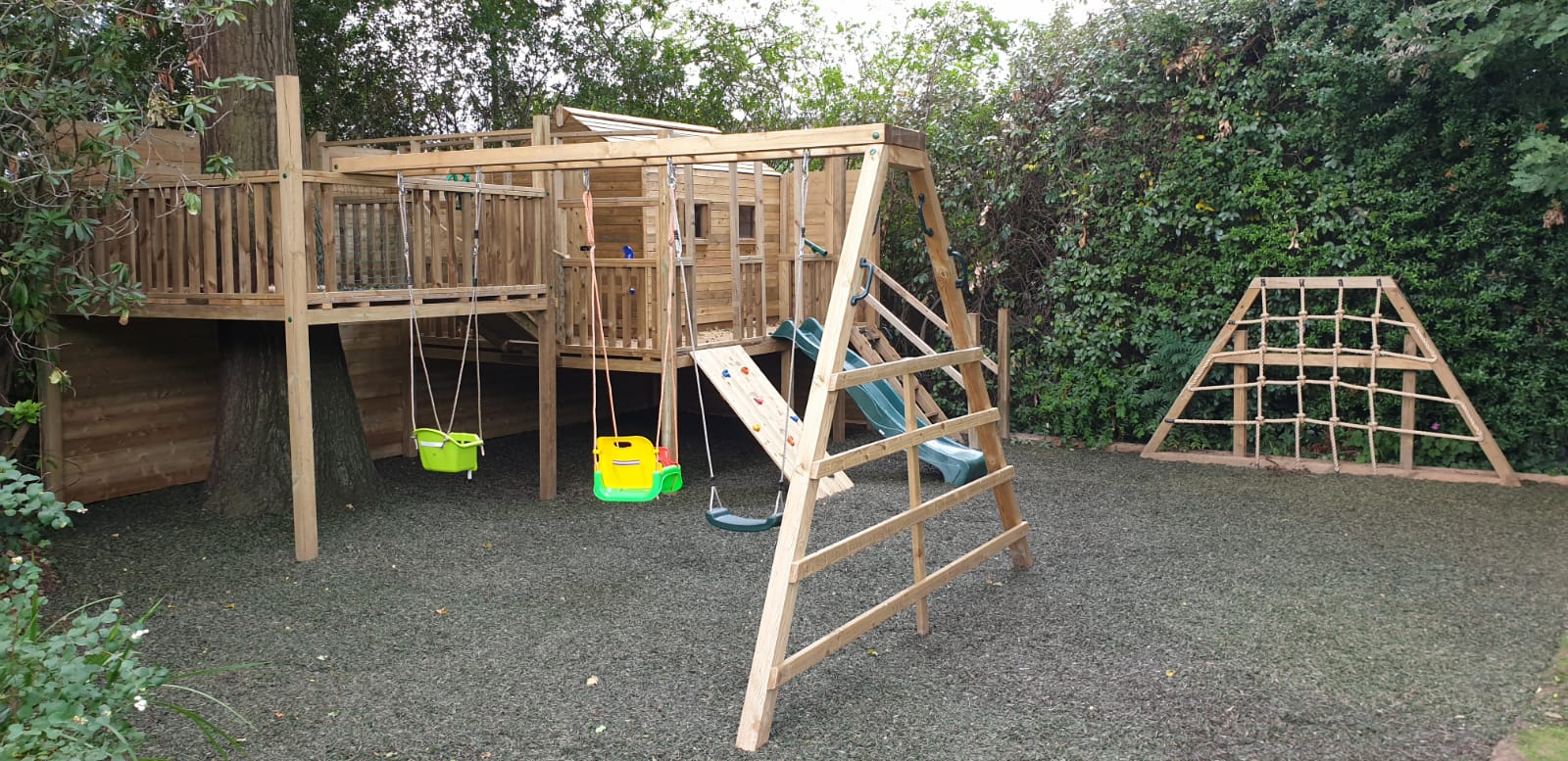
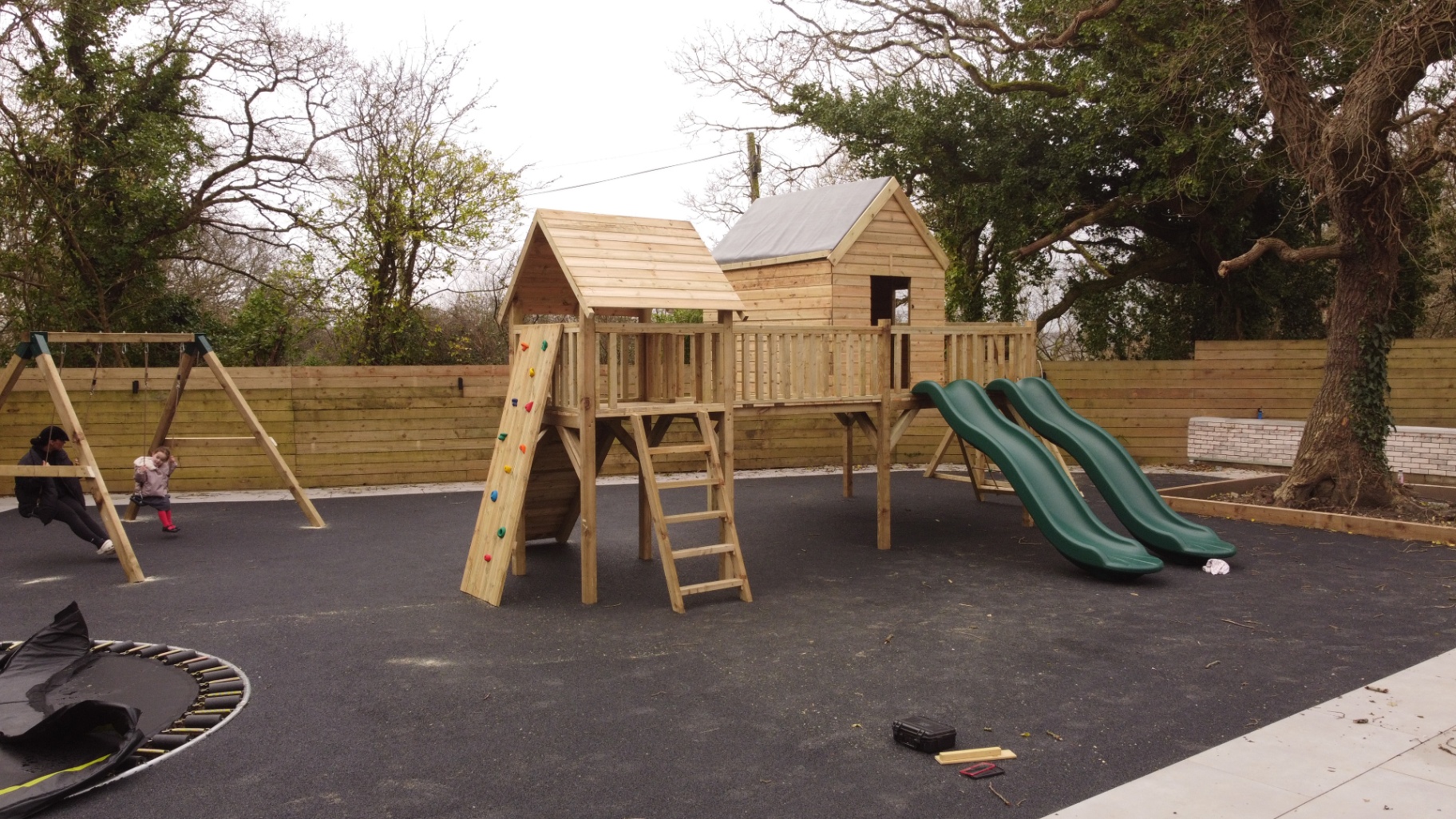
Bespoke climbing frames provide unlimited design possibilities, allowing families to create play structures that perfectly match their children's interests and developmental needs. Custom designs can incorporate slides, climbing walls, bridges, ramps, fireman's poles, monkey bars, and adjustable platform heights configured according to specific requirements.
The modular nature of wooden bespoke frames offers complete control over design elements, enabling families to create themed play areas such as pirate ships, castles, or adventure forts. This level of personalization ensures the climbing frame becomes a unique centerpiece that complements the garden's aesthetic while providing engaging play experiences.
Bespoke designs also accommodate challenging garden conditions including sloped terrain, irregular shapes, or limited space constraints. Professional designers can create solutions that maximize play value while working within physical limitations that would prevent standard shop-bought frames from being suitable.
Premium Materials and Construction
Custom climbing frames typically utilize high-quality materials selected for durability and longevity. Many bespoke wooden frames feature sturdy cedar timbers that naturally resist decay and insect damage, ensuring years of safe use. Premium materials contribute to superior weather resistance and structural integrity compared to mass-produced alternatives.
The construction process involves precision engineering and craftsmanship that results in robust, stable structures designed to withstand intensive use by multiple children over extended periods. Custom manufacturing allows for reinforced joints, enhanced stability features, and superior finishing that enhances both safety and appearance.
Professional Installation and Safety Standards
Bespoke climbing frames include professional installation services that ensure equipment is securely anchored and meets all relevant safety regulations, including EN1176 safety standards. Professional installers possess the expertise to properly prepare foundations, secure structural elements, and verify all safety requirements are met.
The installation process includes site assessment, ground preparation, precise assembly, and comprehensive safety testing. This professional approach eliminates the risks associated with incorrect assembly while providing families with confidence in the equipment's safety and reliability.
Shop-Bought Climbing Frame Options
Shop-bought climbing frames offer a more accessible entry point into outdoor play equipment, providing pre-designed structures at various price points with professional installation services available.
Cost-Effective Solutions
Pre-manufactured climbing frames typically require lower upfront investment compared to bespoke alternatives, making quality play equipment accessible to families with tighter budgets. Metal climbing frames, in particular, offer significant cost savings while still providing engaging play experiences.
The standardized manufacturing process enables economies of scale that reduce production costs, resulting in more competitive pricing for families. This affordability allows families to invest in outdoor play equipment without the substantial financial commitment required for custom designs.
Streamlined Installation Process
Shop-bought frames often feature simplified assembly processes designed for efficient installation. Many manufacturers provide detailed instructions and standardized components that facilitate quicker installation times, reducing both labor costs and disruption to family routines.
The pre-designed nature of these frames means installation teams can work more efficiently, drawing on experience with identical products to complete assembly safely and professionally. This efficiency can translate to reduced installation costs for families.
Design Limitations and Standardization
While shop-bought frames offer various configurations, customization options remain limited compared to bespoke alternatives. Families must select from available designs rather than creating unique structures tailored to their specific requirements.
Metal frames, while affordable, may not accommodate the unique features possible with custom wooden designs. The standardized approach means families may need to compromise on certain desired features or accept designs that don't perfectly match their vision for the ideal play area.
Cost Analysis and Long-Term Value
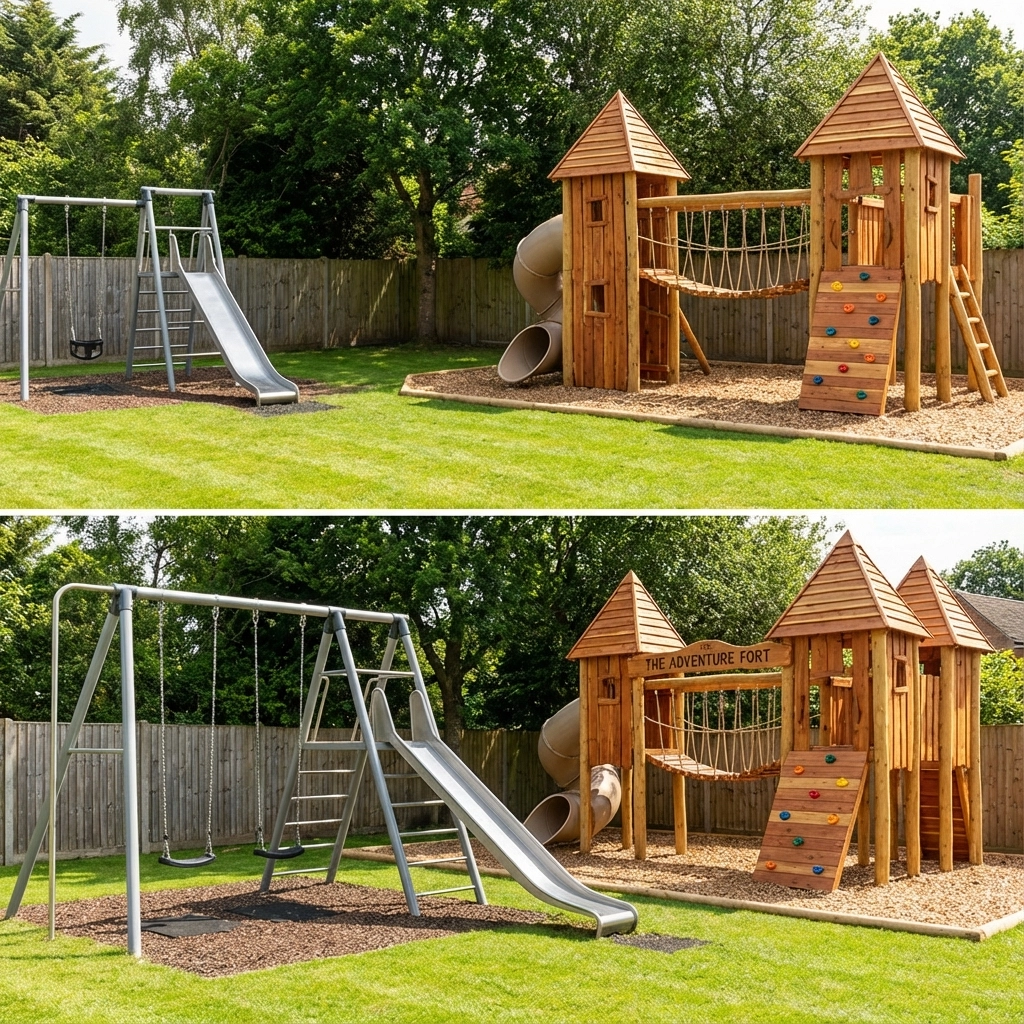
The financial comparison between bespoke and shop-bought climbing frames extends beyond initial purchase price to include long-term value considerations, maintenance requirements, and potential return on investment.
Initial Investment Comparison
Bespoke wooden climbing frames typically start around £1,975 for basic configurations, with more elaborate designs requiring substantially higher investment. This initial cost reflects premium materials, custom manufacturing, and professional design services.
Shop-bought alternatives, particularly metal frames, often cost significantly less upfront, making them attractive to budget-conscious families. However, this lower initial cost may not account for additional expenses such as ground preparation, safety surfacing, or necessary modifications for proper installation.
Warranty and Longevity Considerations
High-quality bespoke frames often include lifetime warranties on timber components, providing long-term protection against defects and premature wear. This warranty coverage can represent substantial value over the equipment's lifespan, potentially offsetting higher initial costs.
The superior materials and construction methods used in bespoke frames typically result in longer service life compared to mass-produced alternatives. Premium cedar construction naturally resists decay and insect damage, reducing replacement frequency and maintenance expenses.
Maintenance and Durability
Wooden bespoke frames require regular maintenance including annual treatments and periodic inspections, but their robust construction typically withstands intensive use better than lighter shop-bought alternatives. Metal frames require less maintenance but may need replacement sooner due to lighter construction.
The modular design of many bespoke frames allows for easier repairs and component replacement, extending overall service life and maintaining safety standards throughout the equipment's lifespan.
Safety Standards and Professional Installation
Both bespoke and shop-bought climbing frames must meet stringent safety requirements, but the approach to achieving and maintaining these standards differs significantly between options.
Compliance with Safety Regulations
Professional installation ensures all climbing frames meet EN1176 safety standards regardless of whether they are bespoke or shop-bought. These standards cover structural integrity, spacing requirements, fall zones, and material specifications designed to minimize injury risk.
Bespoke frames benefit from custom engineering that can incorporate enhanced safety features beyond minimum requirements, while shop-bought frames rely on standardized designs that meet but may not exceed safety standards.
Ground Preparation and Anchoring
Proper installation requires appropriate ground preparation and secure anchoring systems to prevent movement or instability during use. Professional installers assess soil conditions, drainage requirements, and foundation needs to ensure stable installation.
Metal frames typically require robust anchoring systems to prevent movement, while wooden frames often feature more substantial foundations that provide inherent stability. Professional installation ensures appropriate techniques are used for each frame type and site condition.
Ongoing Safety Maintenance
Regular safety inspections and maintenance are essential for all climbing frames regardless of initial cost or construction method. Professional installation typically includes guidance on maintenance schedules and safety inspection requirements.
Bespoke frames often include detailed maintenance instructions and support from the manufacturer, while shop-bought frames may require families to source maintenance guidance independently.
Making the Right Choice for Your Family
The decision between bespoke and shop-bought climbing frames depends on multiple factors including budget constraints, customization requirements, garden conditions, and long-term family plans.
Families prioritizing maximum customization, premium materials, and long-term value should consider bespoke options despite higher initial investment. The ability to create unique designs that perfectly match family needs and garden conditions often justifies the additional cost.
Budget-conscious families or those with standard garden conditions may find shop-bought frames provide excellent value while still delivering professional installation and safety compliance. The lower initial investment allows families to allocate resources to other garden improvements or family priorities.
Garden conditions significantly influence the appropriate choice, with challenging terrain or space constraints often favoring bespoke solutions that can accommodate unique requirements. Standard gardens with level terrain and adequate space can typically accommodate shop-bought options successfully.
The decision ultimately requires balancing immediate budget constraints against long-term value expectations, customization requirements, and family priorities. Professional consultation can help families evaluate their specific circumstances and make informed decisions that provide years of safe, enjoyable outdoor play experiences.
Both options offer distinct advantages when properly selected and professionally installed, ensuring families can create engaging outdoor play environments that support children's development and provide lasting enjoyment for years to come.